Quick Answer
Deburring rounds a cut edge to remove burrs and improve safety; chamfering cuts a new, defined angled edge — most often for weld preparation. Many shops need both, in that order.
Ask five people on a shop floor to define “deburring” versus “chamfering” and you'll usually get five slightly different answers. Both terms get thrown around loosely in sheet and plate fabrication, sometimes interchangeably, but they solve two different edge problems — and mixing them up is an easy way to end up quoting the wrong machine.
Here's the practical breakdown: what each process actually does, why it matters downstream, and how to figure out whether your shop needs a deburring machine, a chamfering machine, or both.
What Deburring Actually Does
Whenever metal is cut — by laser, plasma, punching, or sawing — the process leaves burrs: small raised slivers or ragged fragments of displaced material along the cut edge. Deburring removes these burrs and lightly rounds the edge, without changing the part's overall shape or dimensions. This is sometimes called edge rounding, since the practical result is a smooth, consistently rounded edge rather than a sharp or jagged one. The main reasons fabricators deburr parts are straightforward: sharp burrs are a safety hazard for anyone handling the part by hand, they can snag on coatings, gaskets, or mating components, and they interfere with precise fit-up during assembly or welding. This is also why deburring is typically the first finishing step right after laser or plasma cutting — the fresher the cut, the sharper the burr.
What Chamfering Actually Does
Chamfering is a deliberate, controlled process — it doesn't just smooth an existing edge, it cuts a new, defined angled surface along the edge of the plate or part, commonly in the 30°–45° range depending on the application. In plate fabrication, this angled edge is most often called a bevel, and the terms chamfering and beveling are frequently used interchangeably for weld-prep work. The primary reason to chamfer or bevel a plate edge is welding: a beveled edge creates a groove that lets weld filler penetrate fully through the joint, rather than sitting only on the surface, which is critical for structural welds in shipbuilding, pressure vessels, and heavy steel fabrication. Chamfering is also used to remove sharp 90° corners for assembly clearance or a defined cosmetic edge, independent of any welding requirement.
Deburring vs Chamfering at a Glance
Deburring
- Removes burrs left by cutting or machining
- Rounds the existing edge — no new angle is cut
- Main driver: safety, clean coating adhesion, fit-up
- Typically the first finishing step after laser/plasma cutting
Chamfering / Beveling
- Cuts a new, defined angled edge (commonly 30°–45°)
- Changes the edge geometry, not just its sharpness
- Main driver: weld penetration, assembly clearance, defined edge
- Typically applied before welding or final assembly
Do You Need Both?
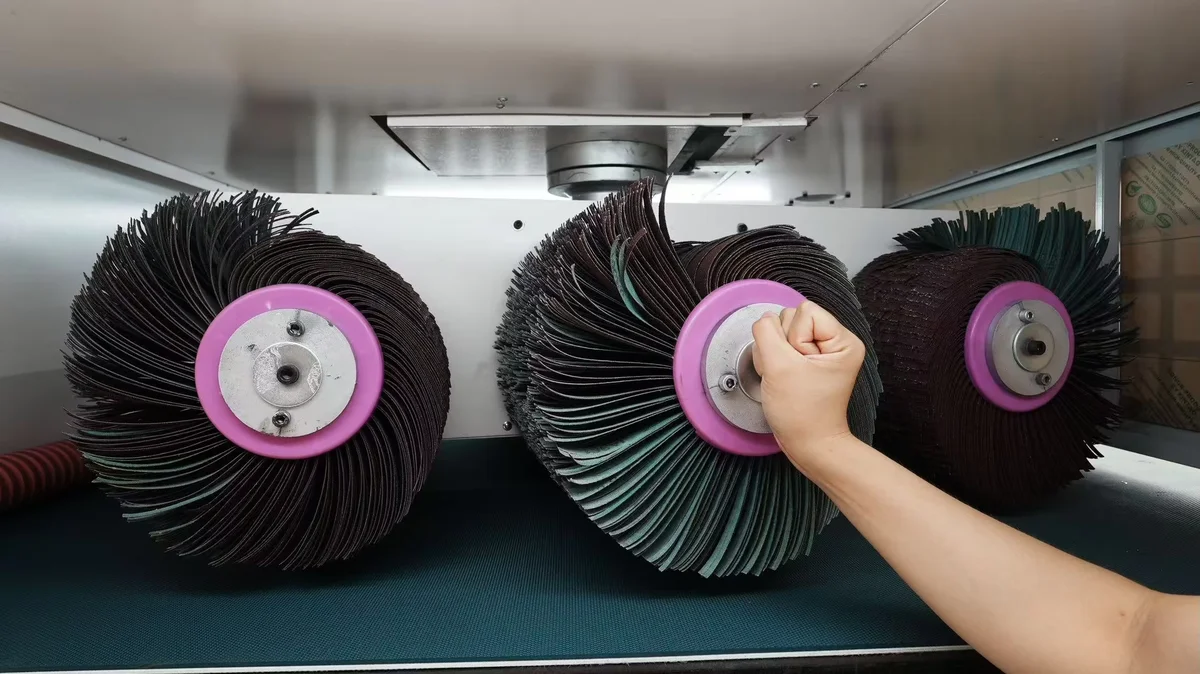
Many structural steel and plate fabrication shops need both processes in the same workflow: deburr the cut edge first to remove sharp fragments, then chamfer or bevel the edges that will be welded. PCL's MDC-Series chamfering machine is built directly on the MD-Series deburring platform, with an optional wire-drawing wheel — so a single production line can deliver edge-rounding, a chamfer for weld prep, and a brushed wire-drawn finish in one pass, instead of routing plates through two separate machines.
A Typical Production Workflow: From Cut to Weld-Ready
For a structural steel fabricator, deburring and chamfering usually show up as two distinct steps in the same production sequence. Plate or profile first goes through laser or plasma cutting, which leaves burrs along every cut edge. Before the part moves further down the line, it passes through deburring to remove those burrs and produce a safe, consistently rounded edge — this step alone is often enough for parts that won't be welded, or that only need a clean, paintable surface. For parts headed to a weld station, the sequence continues: edges that will carry a structural weld are chamfered or beveled to the angle specified in the welding procedure, creating the groove the weld filler needs to fully penetrate the joint. Only after both steps are complete does the part move to fit-up and welding. Skipping deburring before welding non-beveled edges can leave contaminants and sharp fragments that compromise weld quality, which is why many shops treat deburring as a non-negotiable step regardless of what happens afterward.
Choosing the Right Machine for Your Shop
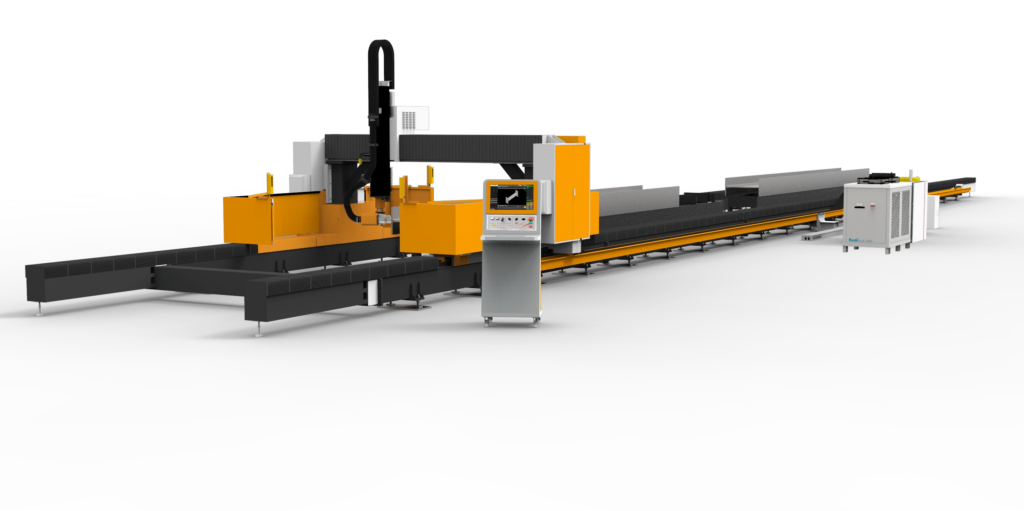
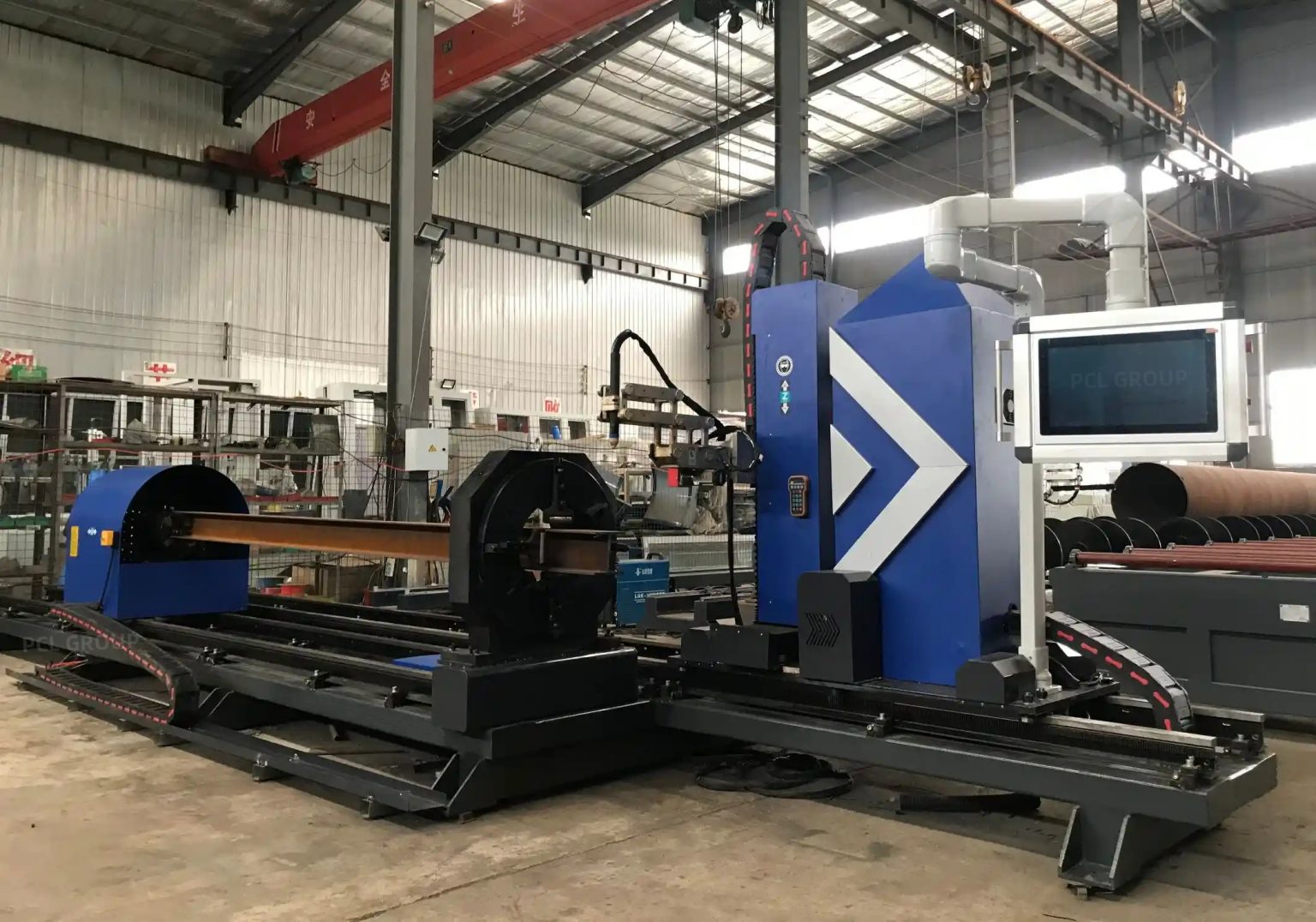
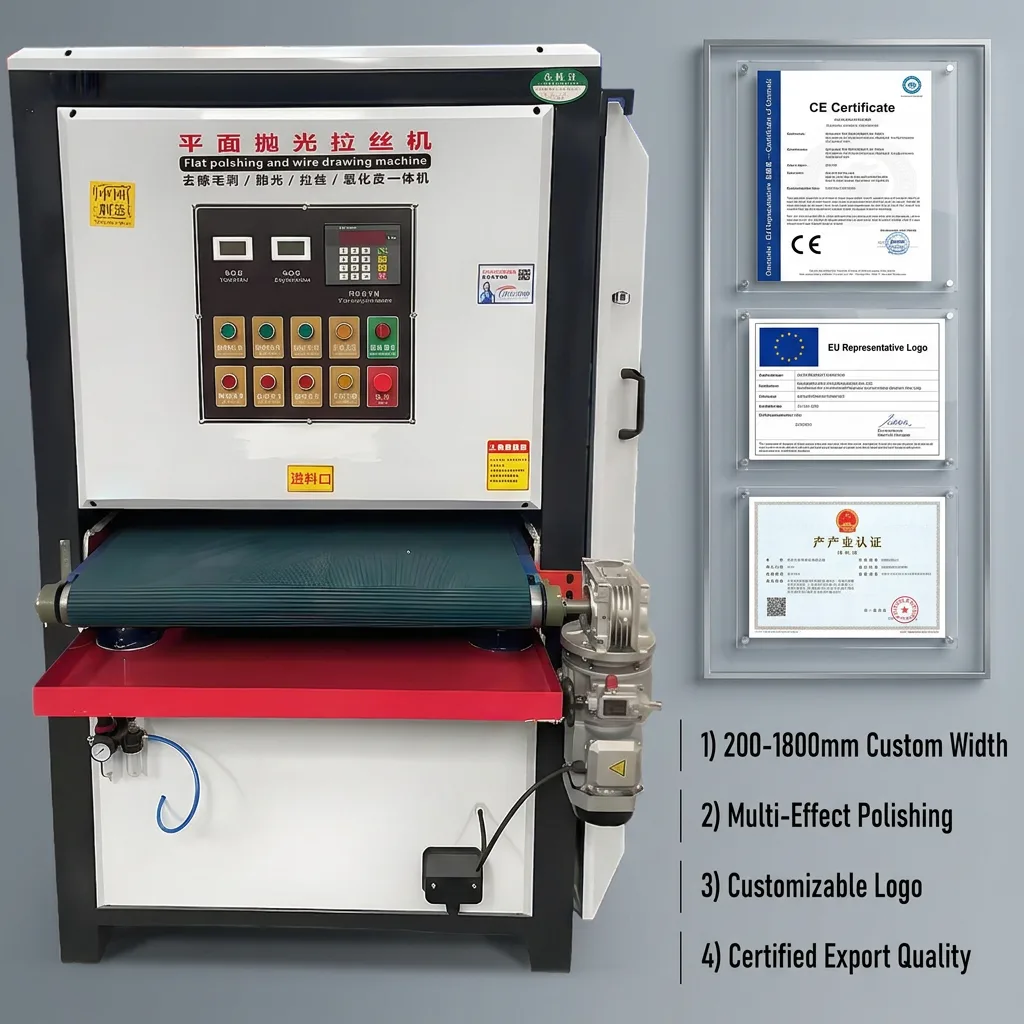
If your primary problem is sharp, unsafe edges coming off the laser or plasma table — parts that need to be safe to handle and ready for coating or painting — start with a deburring machine. PCL's flat deburring and wire-drawing line handles custom widths from 200 to 1,800 mm, runs on 110/220/380V power, and is CE certified, producing matte, brushed, edge-deburred, or mirror finishes from a single line. If your primary requirement is weld preparation — structural steel, pressure vessels, shipbuilding, or any application where filler metal needs to penetrate the joint — a chamfering or beveling machine, like the MDC-Series universal wheel head, is the right starting point. And if your shop routinely needs both edge-rounding and weld-prep bevels on the same parts, look at a combined-capability line rather than running material through two separate machines.
Frequently Asked Questions
No — they solve different problems on the same production line. Deburring removes burrs and rounds an existing cut edge without changing its angle; chamfering (often called beveling in plate work) cuts a new, deliberately angled edge, most often to prepare a joint for welding. Many shops need both, in that order: deburr first, then chamfer or bevel the edges that will be welded.
In plate fabrication, the terms are often used interchangeably. Both describe cutting a defined angled edge, most commonly for weld preparation. Some shops reserve “chamfer” for a small angled edge break and “bevel” for a larger weld-prep angle, but there is no universal industry standard distinguishing the two.
Yes. Removing burrs and loose fragments before welding helps ensure a clean, consistent weld joint and reduces the risk of trapped contaminants in the weld pool.
Weld-prep bevel angles commonly range from 30° to 45° per side, depending on plate thickness, joint design, and welding process — always confirm the required angle against your welding procedure specification (WPS).
Some platforms, like PCL's MDC-Series, are built on a shared deburring platform with an optional wire-drawing wheel, allowing edge-rounding and a brushed finish in the same pass. A dedicated combination line can reduce material handling versus running parts through two separate machines.