Quick Answer
Stainless and duplex steels need heat-controlled, often wet processing to protect their finish and corrosion resistance; carbon steel is the most forgiving; aluminum, copper, and galvanized sheet need lighter pressure and finer abrasives to avoid loading, gouging, or coating loss.
Run stainless and mild steel through the same deburring setup and you'll get two very different results. A deburring machine isn't a one-setting-fits-all tool — the right wheel or belt, pressure, and processing method (wet or dry) shifts depending on what metal is actually feeding through it.
The differences aren't cosmetic. Get the abrasive selection or heat control wrong on the wrong material and you can strip a protective coating, discolor a corrosion-resistant surface, or embed particles that cause rust spots weeks after the part ships. Here's what changes across the materials shops run most often, and why it matters beyond just getting the burr off.
Stainless Steel
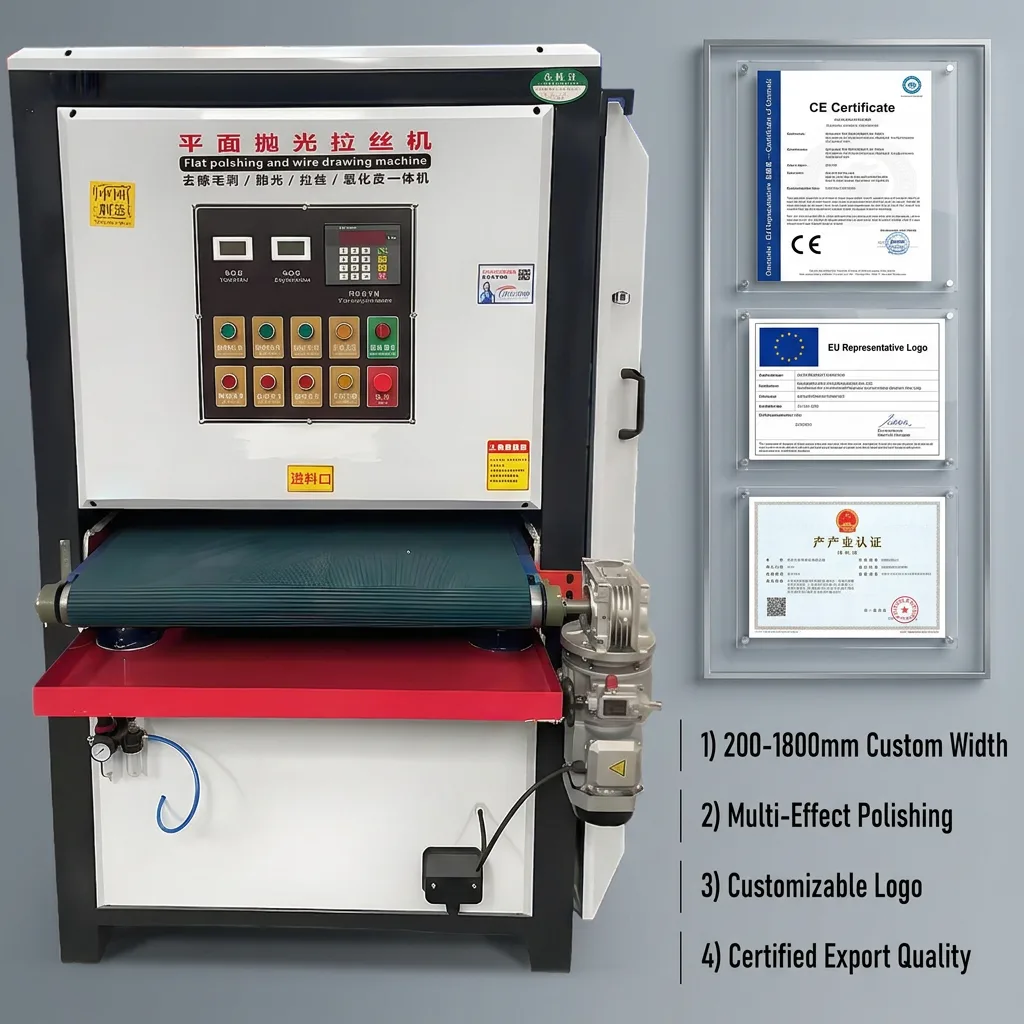
Stainless steel is finish-sensitive in a way carbon steel isn't. Its corrosion resistance comes from a thin, self-healing chromium oxide layer on the surface — and excessive heat during aggressive dry deburring can produce visible heat tint (a blue-brown discoloration) that signals chromium depletion in that spot, along with a weaker passive layer underneath. Many shops verify surface condition after finishing against a passivation standard such as ASTM A967, and favor wet processing for stainless specifically to control that heat buildup, paired with abrasive grades suited to a brushed or mirror finish rather than a coarse structural-steel belt. PCL's deburring machine supports both wet and dry configurations, so the same line can be set up for heat-sensitive stainless without needing a separate machine.
Aluminum
Aluminum is soft compared to steel, which means it can “load” abrasive belts and wheels — material builds up in the abrasive rather than being cut away cleanly, leaving a smeared edge instead of a crisp deburred one. It also forms its own protective oxide layer (aluminum oxide) almost instantly on exposure to air, so the corrosion concerns that drive wet processing on stainless generally don't apply the same way here. What does matter is grit selection and feed speed — open, non-loading abrasive types and moderate feed rates keep the cut clean on common structural and enclosure alloys like 5052 and 6061.
Carbon and Mild Steel
Carbon and mild steel are generally the most forgiving materials to deburr and the most common in structural and general fabrication work. Standard abrasive belts and wheels handle these materials well across a wide range of thicknesses. One practical wrinkle: hot-rolled plate carries mill scale on the surface that wears an abrasive faster on the first pass than clean cold-rolled sheet does, so shops running a mix of both sometimes notice a difference in abrasive life between the two even though the base metal is the same.
Copper and Brass
Copper and brass are soft, highly thermally conductive, finish-sensitive metals often used where appearance or electrical/plumbing function matters. Because they're ductile rather than brittle, their burrs tend to smear and roll under a dull abrasive instead of shearing off cleanly the way a more brittle steel burr does — which is why sharper, more open-grit abrasives at lighter pressure typically produce a cleaner result than the aggressive settings used on structural steel. Excess pressure here doesn't just risk gouging; on thin copper and brass stock it can visibly distort the part.
Galvanized Steel
Galvanized sheet carries a zinc coating applied by hot-dip galvanizing (per standards such as ASTM A123/A653) specifically to protect the base steel from corrosion, and aggressive deburring can strip that coating right at the edge — the one place it's already thinnest. Coating thickness generally scales with the base steel's own thickness class, so a heavier structural galvanized section tolerates a bit more abrasive contact than thin galvanized sheet does. Either way, a lighter touch or a wheel selection aimed at removing just the burr — not the coating around it — helps preserve the corrosion protection the zinc is there to provide. Dry processing on galvanized also generates zinc oxide dust, which is worth accounting for in shop ventilation.
Why Dedicated Wheels Matter: Cross-Contamination
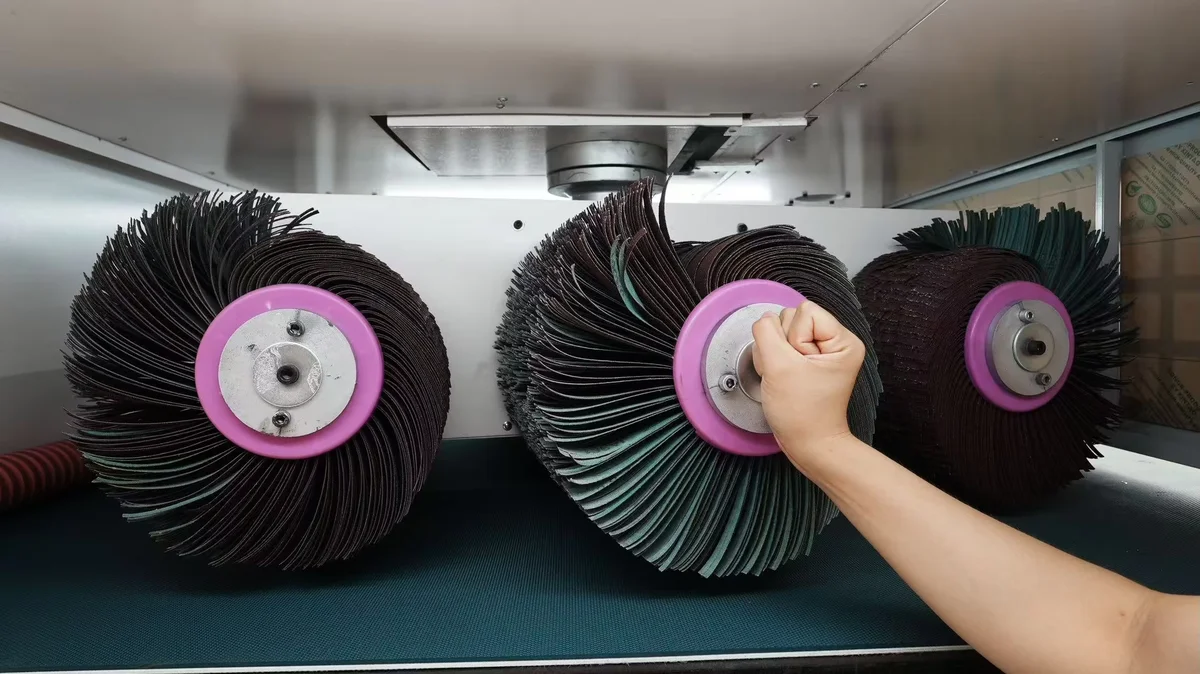
One detail that separates an experienced deburring setup from a generic one: keeping abrasive wheels and belts dedicated by material family. Run the same wheel across carbon steel and then stainless, and microscopic carbon-steel particles can embed in the stainless surface — and rust there within days or weeks, showing up as scattered surface spotting on a part that was otherwise correctly finished. It's a common source of warranty complaints that has nothing to do with the stainless itself. Shops that regularly switch between ferrous and non-ferrous or carbon and stainless work typically keep a separate wheel or belt set for each material family, and reconfigure between runs rather than assuming one abrasive setup covers everything that comes through the line. A machine built for quick wheel changes and both wet and dry operation — including an optional wire-drawing wheel for a decorative brushed finish in the same pass — makes that reconfiguration a changeover, not a second machine purchase.
Abrasive Grit Selection by Material
Grit choice follows a similar logic across materials, using the standard coarse-to-fine abrasive numbering shops already work with (CAMI or FEPA grit scales). Heavy burr removal on carbon and mild steel typically starts coarse — roughly 36 to 60 grit — where stock removal matters more than surface finish. General-purpose deburring on structural parts often steps up to a medium 80 to 120 grit, balancing cut rate against a reasonably clean edge. Cosmetic or corrosion-sensitive work — brushed stainless, aluminum enclosures, copper and brass parts — moves finer still, often 150 to 240 grit or beyond, trading cut rate for a smoother, more consistent surface. The pattern holds across the metals above: softer or finish-sensitive ones move toward finer grits and lighter pressure, while tougher, less finish-sensitive material can run coarser and more aggressively without consequence.
Frequently Asked Questions
Yes, most flat deburring lines can handle a range of metals, but abrasive selection, pressure, and speed usually need adjusting between materials for the best result.
Not necessarily special equipment, but many shops adjust their process — often using wet processing and finish-appropriate abrasives — to protect the surface finish and corrosion resistance.
Aggressive deburring can strip zinc coating at the edge. Using lighter pressure and appropriate abrasive selection helps remove the burr while preserving as much of the coating as possible.
Heat tint is a blue-brown discoloration caused by excess heat during cutting or finishing. It signals localized chromium depletion in the surface layer, which reduces corrosion resistance at that spot even though the part still looks otherwise finished.
Sharing an abrasive between the two can embed carbon-steel particles into the stainless surface. Those particles can rust after the part is in service, creating surface spotting that has nothing to do with the stainless itself — dedicated wheels per material family avoid this.
Most shops move finer than a standard structural-steel setup — commonly 150 to 240 grit or beyond — trading cut rate for a smoother, more consistent surface, since these materials are chosen partly for appearance and are also more prone to visible scratching from a coarse abrasive.