Home / Guides & Resources / How to Choose a Plate Beveling Machine: 4 Questions to Answer First

How to Choose a Plate Beveling Machine: 4 Questions to Answer First

Choosing a plate beveling machine comes down to four questions: thickness range, bevel angle, machine type, and volume. Here's how to work through each one.

Written by Jack, Technical Director · Updated September 2026

How to Choose a Plate Beveling Machine: 4 Questions to Answer First

Buying a plate beveling machine is really four separate decisions bundled into one purchase order: thickness range, bevel angle, machine type, and automation level. Get any one of those wrong and you'll either be waiting on a machine that can't keep up, or paying for capability you'll never use. Plate beveling machines span everything from compact wheel-head units to large CNC and rolling-type lines — working through these four questions before you request a quote saves time on both sides of the conversation.

Question 1: What Plate Thickness Range Do You Run?

Confirm the machine's rated thickness range covers both your thinnest and thickest regular jobs — a machine sized for thin sheet may struggle or wear quickly on heavy plate, while an oversized machine may lack fine control on thinner material. List your actual thickness range before comparing machines, not just your single most common job.

Question 2: What Bevel Angles Do Your Welding Procedures Require?

Weld-prep bevel angles are typically set by the welding procedure specification (WPS) for the joint, commonly in the 30°–45° range per side, though this varies by application. Make sure any machine you're evaluating can hit the specific angle range your welding procedures require, not just a single fixed angle — and confirm whether you need single-bevel, double-bevel, or both configurations.

Question 3: Which Machine Type Fits Your Parts — Wheel Head, Milling, Rolling, or Portable?

A universal wheel-head beveler, like PCL's MDC-Series, is well suited to shops that also need edge-rounding or a brushed finish in the same line, since it's built on the same MD-Series platform used for deburring. Milling-type machines use a carbide-insert cutter for precise, repeatable angles on thicker plate. Rolling or shear-type bevelers are suited to long, continuous straight edges. Portable beveling tools are useful for on-site work or oversized plates that can't be brought to a stationary machine.

Question 4: How Much Automation Does Your Volume Justify?

Higher-volume shops benefit from automatic feed and continuous processing, while lower-volume or job-shop work may be well served by a simpler, manually fed setup. Match the automation level to how often the machine will actually run, not just to the largest job you can imagine — an oversized, heavily automated line sitting idle most of the week rarely pays for itself faster than a right-sized one.

Quick Answer by Shop Type

High-Volume Production Shops

  • Continuous-feed, automatic-infeed machine
  • Wide working width to cover multiple job sizes without changeover
  • Wheel-head design if edge-rounding is also needed

Job Shops & Low-Volume Work

  • Manually fed or portable beveling tool
  • Prioritize flexibility across plate sizes over throughput
  • Lower upfront cost matters more than cycle time

Frequently Asked Questions

This depends on your welding procedure specification, but 30° to 45° per side is a common range for structural weld-prep bevels.

Many beveling machines are rated for a thickness range rather than a single thickness, but check the specific machine's rated range against your thinnest and thickest regular jobs.

Portable tools are generally chosen for flexibility and access rather than outright precision, and are commonly used for on-site work or plates too large or awkward to move to a stationary machine.

Not necessarily — many wheel-head and milling-type beveling machines can be set up for either configuration; confirm this capability against your specific welding procedures before buying.

Yes — similar to deburring lines, wheel-head beveling machines can be configured as single-head (one edge or face per pass) or double-head/double-sided (both edges or faces in one pass). Which one you need depends on whether your parts require beveling on one side only or on both, and how much throughput your volume justifies.
Keep Reading

Related Guides

Chamfer vs Bevel vs Fillet: What Each Metal Edge Term Actually Means
Guide

Chamfer vs Bevel vs Fillet: What Each Metal Edge Term Actually Means

Chamfer, bevel, fillet, radius — four edge terms that get mixed up constantly on shop drawings. Here's a quick reference, then the detail behind each one.

Read Article
Milling vs Rolling vs Portable Beveling: Which Method Actually Fits Your Shop
Guide

Milling vs Rolling vs Portable Beveling: Which Method Actually Fits Your Shop

Say your shop needs a consistent bevel on every seam of a pressure vessel head. Do you mill it, roll it, or send a crew out with a portable tool? Here's how to decide.

Read Article
Deburring vs Chamfering: Which Does Your Shop Need?
Guide

Deburring vs Chamfering: Which Does Your Shop Need?

Deburring and chamfering solve two different edge problems. Here's how to tell which process — or which machine — your production line actually needs.

Read Article
Equipment

Related Machines

Structural Steel Laser Cutting Machine
Structural Profile Cutting

Structural Steel Laser Cutting Machine

A dedicated 3D laser profiling line for H-beams, I-beams and channel steel — built to turn Tekla models straight into finished, weld-ready structural members.

View Machine
8-Axis CNC Plasma Beam Cutting Machine
Structural Profile Cutting

8-Axis CNC Plasma Beam Cutting Machine

One 3D profiling center for box sections, beams and pipe — an 8-axis plasma platform that replaces marking, drilling and manual coping with a single CNC program.

View Machine
H-Series Beam Cutting Machine
Structural Profile Cutting

H-Series Beam Cutting Machine

High-precision robotic profile fabrication for H, I, U and L sections — automatic sensing compensates for material deviation so every cut is ready to weld.

View Machine
3D Robot Laser Cutting Machine
Structural Profile Cutting

3D Robot Laser Cutting Machine

A 6-axis robotic fiber laser cell for 3D curved workpieces, formed automotive parts and complex metal structures — flexible enough to replace punching dies.

View Machine
CNC Tube Laser Cutting Machine LT240
Tube & Pipe Processing

CNC Tube Laser Cutting Machine LT240

One machine, infinite profiles — high-precision fiber laser processing of H-beams, square tube, rectangular tube, round tube and channel steel.

View Machine
600–2000mm Large Diameter Steel Pipe Cutter
Tube & Pipe Processing

600–2000mm Large Diameter Steel Pipe Cutter

A heavy-duty rotary axis thermal cutting platform purpose-built for large-diameter industrial piping and infrastructure components.

View Machine
CNC Plasma Air Pipe Bevel Cutting Machine
Tube & Pipe Processing

CNC Plasma Air Pipe Bevel Cutting Machine

Cutting and beveling combined in one pass — a 5-axis pipe processor built for tees, miters, saddles and centerline offsets on 40–600mm pipe.

View Machine
Teaching-Free Robotic Welding Station
Intelligent Robotic Welding

Teaching-Free Robotic Welding Station

Zero-programming automated welding for structural steel, H-beams and heavy equipment — the robot scans the joint and welds without manual teaching.

View Machine
Gantry Intelligent Welding Solution
Intelligent Robotic Welding

Gantry Intelligent Welding Solution

An overhead gantry robotic welding cell for infrastructure beams, ship sub-assemblies and heavy crane structures — freeing the shop floor while holding tight geometric accuracy.

View Machine
3D Robotic Laser Welding Machine
Intelligent Robotic Welding

3D Robotic Laser Welding Machine

Three-dimensional robotic motion meets focused laser welding — precise, low-distortion joints on complex geometries, with MIG and laser tooling on the same arm.

View Machine
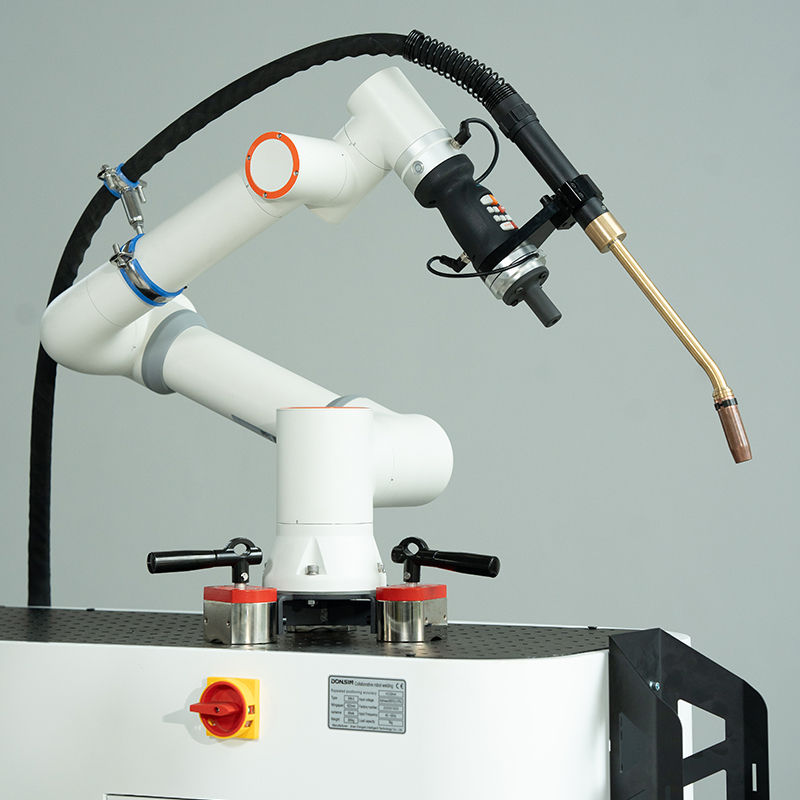
Cobot Welding Machine
Intelligent Robotic Welding

Cobot Welding Machine

Collaborative welding automation designed to work alongside your operators — small footprint, fast deployment, extreme precision on every seam.

View Machine
Stainless Steel Laser Cutting Machine
CNC Laser & Plasma Cutting

Stainless Steel Laser Cutting Machine

Advanced CNC technology for high-speed stainless steel processing — clean edges and consistent accuracy from thin sheet through thick plate.

View Machine
Small Precision Laser Cutting Machine
CNC Laser & Plasma Cutting

Small Precision Laser Cutting Machine

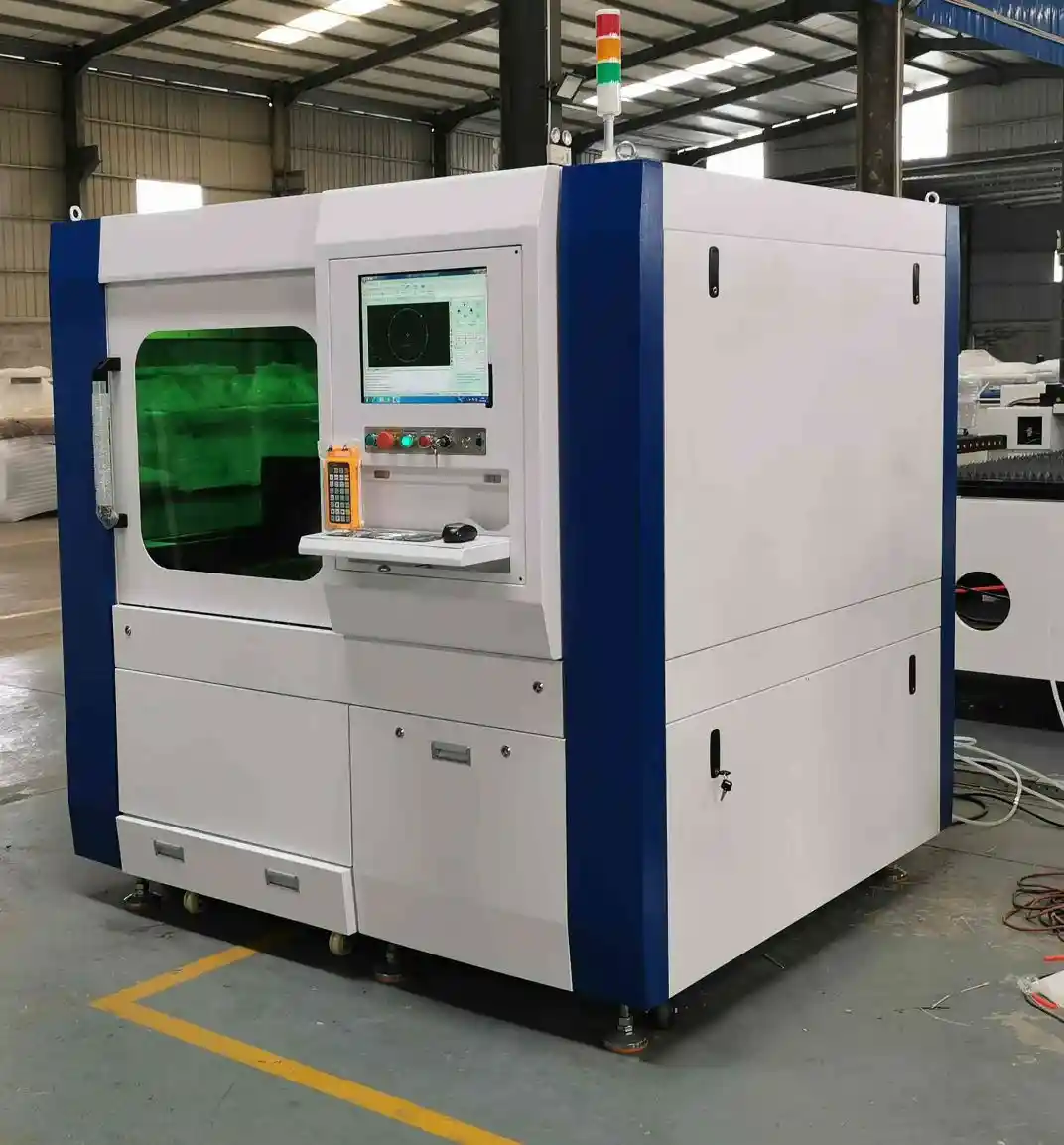
Compact, fully enclosed fiber laser cutting for electronics, precision hardware and small-format metal parts — accuracy down to ±0.01mm in a shop-friendly footprint.

View Machine
Gantry CNC Laser Cutting Machine
CNC Laser & Plasma Cutting

Gantry CNC Laser Cutting Machine

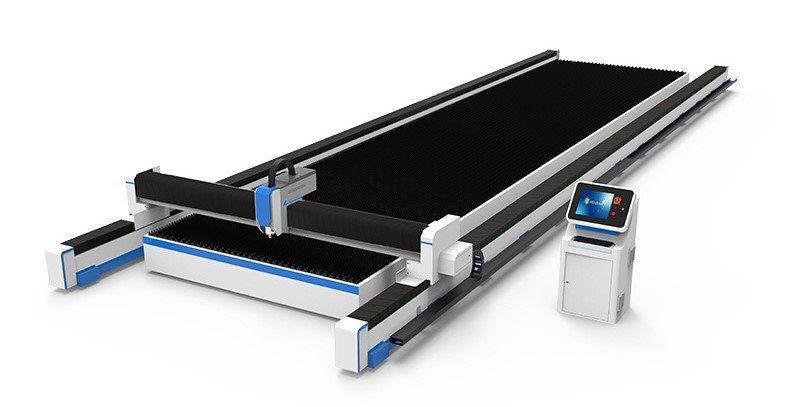
Large-format plate processing built on an aerospace-grade aluminum gantry — high-power fiber laser cutting for plate above 6 metres with 20-year structural accuracy.

View Machine
High-Speed Fiber Laser Cutting Machine
CNC Laser & Plasma Cutting

High-Speed Fiber Laser Cutting Machine

A high-precision fiber laser system for stainless steel, carbon steel, aluminum and other non-ferrous metals — built for both heavy industrial parts and intricate hardware.

View Machine
High-Precision CNC Plasma Cutting Machine
CNC Laser & Plasma Cutting

High-Precision CNC Plasma Cutting Machine

A stress-relieved, industrial-grade plasma cutting platform for heavy-duty plate processing — stable enough for 24/7 production environments.

View Machine
Gantry Type CNC Plasma Cutting Machine
CNC Laser & Plasma Cutting

Gantry Type CNC Plasma Cutting Machine

A high-stability, wide-track gantry platform for large-scale plate processing and high-duty-cycle production — from shipyards to heavy machinery fabrication.

View Machine
Metal Deburring & Wire-Drawing Machine
Metal Surface Finishing

Metal Deburring & Wire-Drawing Machine

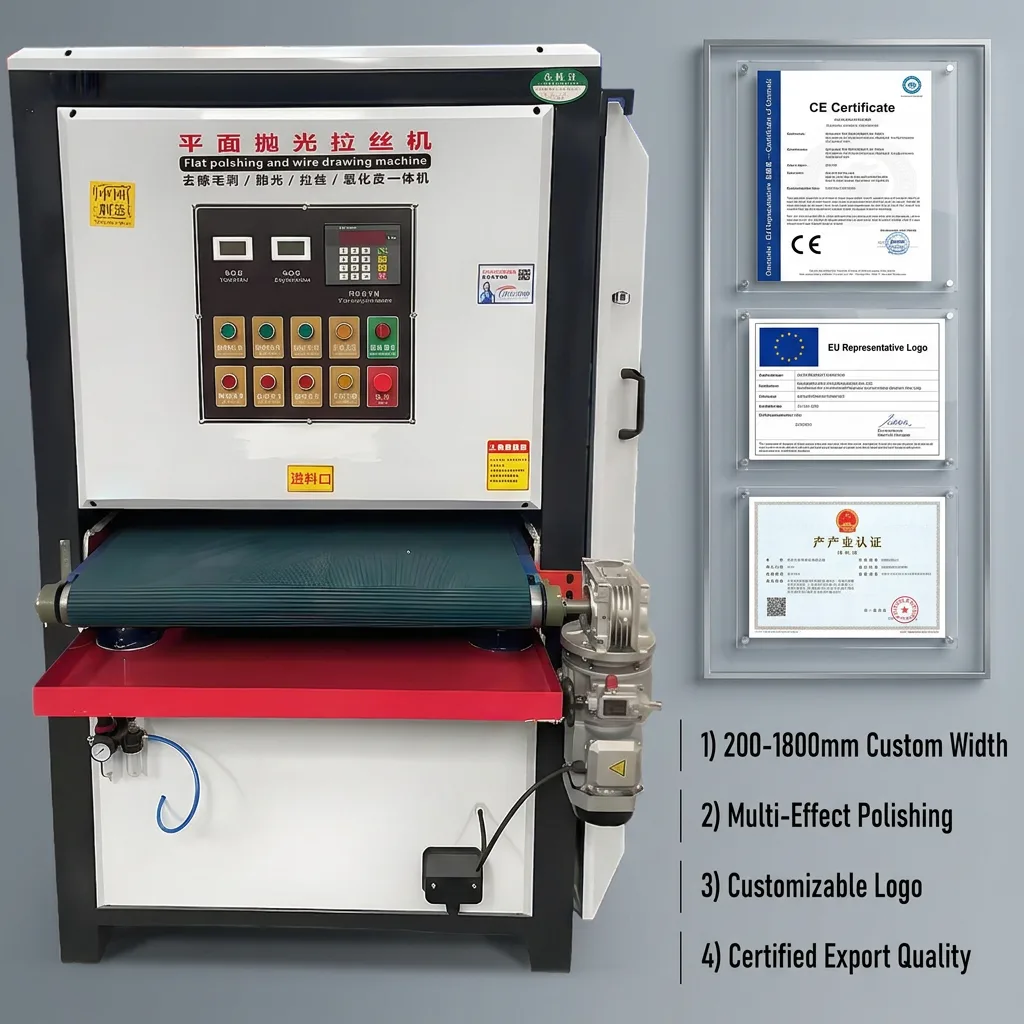
Factory-direct flat deburring, polishing, and wire-drawing machine. 200-1800mm custom width, 110/220/380V, CE certified. Matte, brushed, edge-deburred, and mirror finishes from a single production line.

View Machine
Metal Chamfering Machine – MDC Series
Metal Surface Finishing

Metal Chamfering Machine – MDC Series

MDC-Series metal chamfering machine with universal chamfer wheel head, built on PCL's MD-Series deburring platform. Optional wire-drawing wheel for combined edge-rounding and brushed finish in one pass.

View Machine

Every PCL machine ships with on-site commissioning.

Door-to-door installation, operator training, and lifetime technical support included.

Talk to Our Engineers
Get a Solution Today